
Taskforce Members
Current Task Force Members
Chair of Task Force and Presiding Judge; 3rd Judicial Circuit Court Family Division (Juvenile Section)
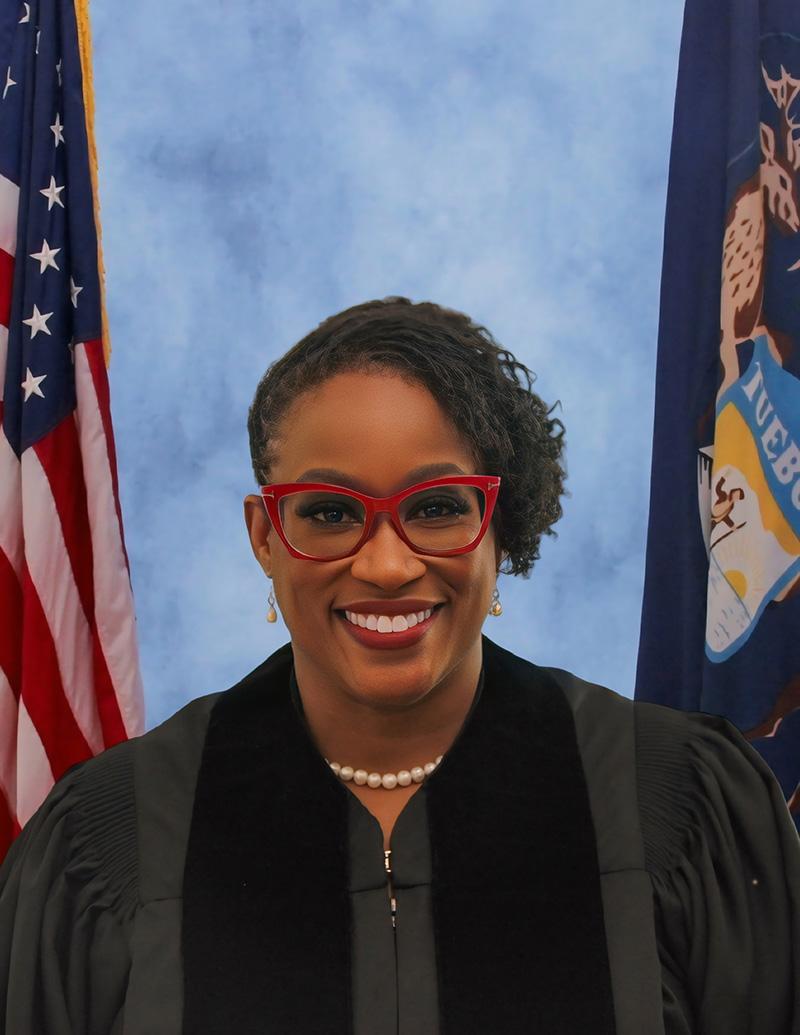 Judge Karen Braxton earned her Bachelor’s degree in Economics and Political Science from the University of Rochester and her law degree from Case Western Reserve University School of Law. She was admitted to practice law in the State of Michigan in November 2003. She immediately entered private practice where she maintained a very successful practice that was devoted to criminal and family law. Her career path was and is driven by her desire to help others; she has demonstrated this by representing thousands of indigent individuals.
Judge Braxton was first elected to serve as Judge of the Third Judicial Circuit Court in November 2012, began her first term in January 2013, and was re-elected in 2018. She presides over delinquency, dependency, guardianship, adoption, and child custody matters. She is the current Presiding Judge for the Third Judicial Circuit Court’s Supervised Treatment for Alcohol & Narcotic Dependency Program, a juvenile drug treatment court program for youth with substance use disorders.
In addition to hearing hundreds of cases per year in the busiest court in the state and because of her judicial leadership, she is a member of the following local and national organizations: National Conference of Juvenile and Family Court Judges, National Association of Drug Court Professionals, Michigan Association of Drug Court Professionals and the Foster Care Review Board Advisory Board. Judge Braxton is an Executive Board member of the National Association of Counsel for Children. She is also certified as a Child Welfare Law Specialist through the same organization. This esteemed professional achievement signifies an attorney’s specialized knowledge, skill, and verified expertise in the field of child welfare law. Judge Braxton has presented locally and nationally, being asked to share her knowledge and experience in these areas. Additionally, Judge Braxton’s goal of making the lives of children and families better regularly requires her to interact with legislative leadership to assist them in their efforts toward doing the same.
Judge Braxton recognizes the importance of continuing judicial education as she enhances both her legal education and professional skills. Due to her extensive training and certifications, she has emerged as a leader and expert in Juvenile Justice Reform and Child Welfare. She was selected by the Chief Judge of the Third Judicial Circuit Court to lead the court’s juvenile justice reform efforts. Judge Braxton was instrumental in securing a partnership with the Annie E. Casey Foundation and led her team through the prestigious and rigorous Georgetown Center for Juvenile Justice Reform Transforming Juvenile Probation Certificate Program. Additionally, she was recently selected to serve on the Local Advisory Board for the Michigan Stop Overreporting Our People (MI STOP), a pilot community-based initiative through the ABA Center on Children and the Law to mitigate racism, bias, and hyper surveillance and overreporting of Black, Indigenous, and Latino/a families to the child welfare system by medical professionals.
Judge Braxton has been recognized for her work with youth and families with various distinctions. In 2021, Judge Braxton was appointed to serve on the Governor’s Task Force on Juvenile Justice Reform. As a result of her dedication and passion for Juvenile Justice and Child Welfare, Judge Braxton has received numerous awards and accolades, including the Western Wayne NAACP Exceptional Leadership Award and was named one of the most Influential Women in Law in 2023.
In her spare time, she goes “Beyond The Bench” and regularly reads to elementary school children in Wayne County, participates in career days, and seeks out and visits community-based organizations that support youth.
Judge Braxton is a proud member of Delta Sigma Theta Sorority, Incorporated and is active in the Inkster Alumnae Chapter. She previously served as the Chair of the Social Action Committee.
Executive Director, Families Forward Michigan
Lara has been a dedicated resource parent for over 20 years. Lara has two stepchildren and two foster children who are currently in the process of being adopted. Lara, her husband and her children are all avid Boy Scout supporters and participants. Lara has served resource families in her community as the Chair of the Foster, Adoptive and Kinship Services Workgroup (FAKS) which is a subcommittee of the Livingston County Human Services Collaborative Body.
Special Advisor to the Children’s Services Senior Deputy Director, MDHHS Regina Branch currently serves as Chief of Staff to the Michigan Department of Health and Human Services (MDHHS) Children’s Services Administration Senior Deputy Director. Regina is proud to be the first African American woman to serve in this role. Prior to this position, she served as the first regional Diversity, Equity & Inclusion Manager within MDHHS Children’s Services Administration covering 5 of the state’s largest counties creating 32 initiatives in her first year. Regina has almost 20 years of experience in various roles serving her community, 12 of them spent within MDHHS. Regina is a staunch advocate for children and families and enjoys spending her time volunteering and raising awareness. Regina recently began a program to raise funds for local non-profit and grassroot organizations that impact marginalized communities with her sister. She has received the “Black Excellence Award”, “Peer Award of Excellence”, and “Most Innovative” within her various roles inside MDHHS. Regina was recently recognized by the National Adoption Association as a “Ujima Leader” working to maintain Black family connections within her state. She is looking forward to starting a fellowship with the AdoptUSKids Minority Professional Leadership Development program this fall. Regina has a bachelors in sociology and human services counseling, a master’s in organizational management, certification in Diversity Equity, and Inclusion in the Workplace and is currently working on certifications in Anti-racism and Inclusive and Ethical Leadership.
Director of Legal Services, The New Foster Care
 MILS’s Executive Director, Cami Fraser, rejoined the MILS staff in 2007 after having served as a law clerk during the summer of 1998. Cami received her Bachelor of Science from the University of Iowa in 1997, where she majored in Political Science and minored in Anthropology and earned a certificate in American Indian and Native Studies. She earned her Juris Doctor from the University of Michigan in 2000. Upon graduation from law school, Cami practiced law in Alaska for over two years and then worked for a tribe in Washington State. She is a member of the Delaware Tribe of Indians, where she serves as an elected judge, and is also enrolled with the Cherokee Nation. She was a member of the Steering Committee for the National Association of Indian Legal Services and is a past chair of the Indian Law Section of the State Bar of Michigan. She is a member of the State Bar’s American Indian Law Committee and sits on the Justice For All Regulatory and Practice Reform Work Group. Cami was recently appointed to the Michigan Task Force on Juvenile Justice Reform.
Parent Representative
Parent Representative
President & CEO The Children’s Center
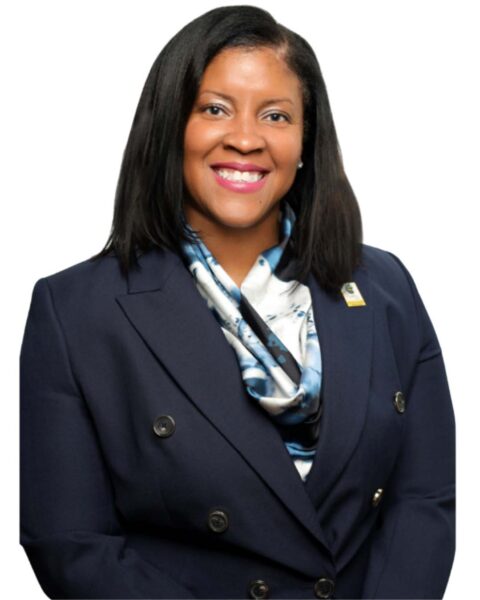 Desiree Jennings is a consummate professional passionate about serving the community and facilitating
positive outcomes for those served. She currently serves as President and Chief Executive Officer for The
Children’s Center of Wayne County and strongly believes that an organization’s mission cannot truly be driven forward to its full purpose without the thread of the leader’s personal compassion and knowledge of the
community systems that are able to improve the trajectory of the lives of the children and families being
served.
Desiree Jennings is an accomplished executive with a demonstrated ability to deliver mission-critical results.
She builds, develops, and motivates high performing teams of competent professionals utilizing her expertise
in strategic planning, leadership, financial analysis, predictive analytics, and administrative efficiency. She is
a strong advocate for children’s issues and services as well as community collaboration around best practices
in achieving optimum outcomes in behavioral health, child welfare, and child well-being.
Previously, Desiree served as The Children’s Center’s Chief Compliance Officer where she led two successful
national accreditations achieving expedited honors. This great success was a result of establishing collaborative relationships with the program and service areas of the organization, formulating consistent forums to review output and outcomes data to identify quality improvement initiatives focusing on the organization’s mission to help children & families shape their own futures.
Desiree holds an MBA and a BA in Psychology both from the University of Michigan. She was recognized by
Michigan Chronicle as a Top 25 Black Non-Profit Leader in 2025. She was awarded the Michigan Chronicle’s
“Women of Excellence” in 2022. She is a member of several community organizations, including the
Michigan Federation for Children and Families, Social Current, and Michigan Behavioral Health and Wellness Collaborative. Desiree serves as a board member of PEAK Health Collective and previously a board member of the MacDowell Preparatory Academy in Detroit. She volunteers her expertise to various nonprofits looking to make an impact throughout Metro Detroit.
Senior Director, Strategic Consulting Casey Family Programs
Youth Representative Kayla Morgan was born in Grand Rapids Michigan. Kayla uses her degree in Criminal Justice, Juvenile Services and her lived experience with aging out of foster care and experiencing teen pregnancy and homelessness to bring awareness to the over representation of children and their families in the child welfare system. Kayla has used her experience in foster care to implement policies and procedures on a national level with the National Child Traumatic Stress Network and Northwestern University and locally on the Race Equity Task Force Group, Kayla has been the Keynote Speaker for United Ways annual Community Conversation on housing and Domestic Violence. Kayla has dedicated her career to healing and uplifting Black and Brown communities with advocacy to prevent further generational trauma through her business Resilient Roots Wellness.
Bureau Director of Children’s Coordinated Health, Policy, and Supports, MDHHS

Patty is the Bureau Director for the Bureau of Children’s Coordinated Health, Policy, and Supports at MDHHS. In this role, Patty provides administrative leadership, oversight, and strategic direction for BCCHPS, including oversight of the Office of the Advocate for Children, Youth, and Families; the Program, Grant, and Quality Monitoring Division; and the Access Standards, Service Array and Policy Division. This involves coordination with community partners and leadership from other administrations within MDHHS to further develop the coordinated array of services and supports available to children, youth and families, and ensure that BCCHPS is a centralized resource for child-serving systems and initiatives throughout our state. This work is an important part of MDHHS’ overall priorities to ensure people have access to health care where and when they need it, and to keep kids safe by impacting placement stabilization, wellness, services, workforce development and supports, and prevention interventions.
Patty has a bachelor’s degree in psychology and English from Wayne State University and a master’s degree in clinical behavioral psychology from Eastern Michigan University. During her tenure with MDHHS, she has served as a Child Welfare Licensing consultant, program manager and, later, as a director of the Division of Child Welfare Licensing. In addition, she gained experience as a program manager in Adoption and Guardianship Assistance Office before joining the Office of the Advocate for Children, Youth, and Families as division director. Patty has also served as an adjunct instructor at Oakland Community College, teaching psychology courses to undergraduate students.
Medical Director, Behavioral Health and Forensic Programs Debra A. Pinals, M.D. serves as Senior Medical and Forensic Advisor and Editor-in-Chief for the National Association of State Mental Health Program Directors (NASMHPD), and as the Medical Director of Behavioral Health and Forensic Programs for the Michigan Department of Health and Human Services and is the Director of the Program in Psychiatry, Law, & Ethics and Adjunct Clinical Professor of Psychiatry at the University of Michigan Medical School and Clinical Adjunct Professor at the University of Michigan Law School. She has worked in outpatient, inpatient settings, forensic and correctional facilities, emergency rooms and court clinics, has received public service awards and has been an expert witness in many cases. She is Board Certified in Psychiatry, Forensic Psychiatry, and Addiction Medicine. During her career she has been a clinical policy advisor related to the opioid crisis and has consulted on complex systems cases for people with mental illness, substance use disorder, and Intellectual and Developmental Disabilities who are receiving treatment or support in various places- such as in community, court, carceral, forensic and state hospital settings. Dr. Pinals was appointed as the Assistant Commissioner of Forensic Services from 2008 to 2016, overseeing work for persons with serious mental illness at the intersection of police, courts and correctional services, and also was appointed Interim State Medical Director from 2012-2013 for the Massachusetts Department of Mental Health. She teaches and publishes extensively and has led and consulted on numerous federal grants including those related to opioids, co-occurring disorders, juvenile justice, and behavioral health and justice partnerships. Recently she has been a lead subject matter expert on issues pertaining to competence to stand trial for the SAMHSA GAINS Center. She conducts work as an expert witness and subject matter expert across the country. She is a past President of the American Academy of Psychiatry and the Law, past Chair of the American Psychiatric Association’s Council on Psychiatry and the Law and Council on Advocacy and Government Relations, as well as past Chair of the Forensic Division and current Chair of the Medical Directors Division for NASMHPD. In her work with NASMHPD she has co-authored key policy papers including “Beyond Beds: The Vital Role of a Full Continuum of Psychiatric Care” and “Crisis Services, Meeting Needs, Saving Lives.”
Lillie is the birth mother of seven beautiful children. In 1989 and 1993, she experienced some of the most challenging times of her life when her children were removed from her care and placed into foster care. Lillie describes her experiences as traumatic and the catalyst for her professional journey. In 2010, Lillie earned her Master of Social Work and is committed to using her passion to advocate for an improved system where parents have a voice in the future of their family. Supporting others through the child welfare process is an important part of this work, and a role Lillie currently serves at Judson Center as a Parent Partner. When Lillie is not working, her passion for serving and supporting others does not end. Since 2007, Lillie has been a pillar in a prison re-entry program where she has focused on a number of key issues including housing, mental health treatment and services, personal identifiers, government benefits, among others. Lillie is committed to using her personal and professional experience and education to promote meaningful change for those whose lives she touches. Lillie shares that, when your children have been removed, it changes you and your outlook on life.
Child Welfare Director, Catholic Charities West Michigan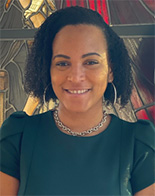 Leticia Pittman, MSW has been serving marginalized communities for over 18 years throughout the State of Michigan and nationally. Leticia previously worked as a CPS Specialist in Kent County where she focused on keeping children safe and with their families. Leticia was then promoted to a Human Resource Developer where she trained employees at all levels all over the State of Michigan in policy, procedures, and best practices for serving clients. Leticia also trained topics such as Communication and Cultural Awareness to encourage stakeholders to lead with a racially equitable lens. Leticia has and continues to consult with leaders on not only operationalizing antiracism efforts but holding themselves and constituents accountable to the work. Leticia is currently serving as Senior Child Welfare Director for Catholic Charities West Michigan where she services families in Foster Care Adoption, and Licensing in over 16 counties and leads offices in Grand Rapids, Muskegon, and Benton Harbor. Leticia is also an Adjunct Professor for Western Michigan University where she teaches Master and Bachelor level courses in Race Equity and Program Planning. Leticia is Co Executive Director of DEI Standards and Solutions LLC. Where she prepares organizations for positive measurable change in their DEI initiatives. Leticia has been serving on the Children Services Agency Anti-Racism Team since 2019 where she is a member of the Leadership Team. Leticia also serves on the board of ERRACE which exists to eliminate structural racism and create a network of equitable Antiracist institutions and communities.
Director, Office of Culture, Community, Education & Leadership, MDHHS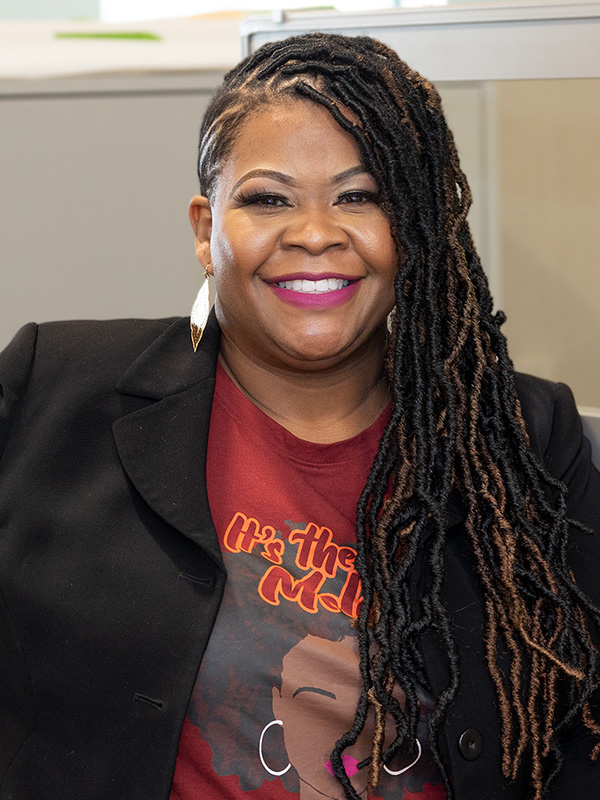 Kimberly Reese is from Flint, MI where she was educated within the Flint public school system. She has over 22 years of experience at MDHHS. Prior to becoming the director of the Office of Race Equity Diversity and Inclusion she oversaw training for all child welfare staff both at MDHHS and private child welfare agencies in Michigan. In addition to this work, she has been a leader for Diversity, Equity, and Inclusion (DEI) efforts within MDHHS, helping to develop and implement a DEI hiring protocol at the Office of Workforce Development and Training (OWDT), serving on OWDT’s Race Equity Team, and assisting in the formation of Children’s Services Agency (CSA) Anti-Racism Transformation Team, on which she serves.
Kimberly began working for MDHHS as an Assistance Payments worker in 2000 in Lapeer County, later becoming a Children’s Protective Services investigator in Genesee County and gaining broad experience as a Family-to-Family Facilitator, Michigan Youth Opportunities Initiative Coordinator, and trainer for the Office of Workforce Development and Training. In 2012, she accepted a manager’s position for both CPS and MiTEAM Specialists, and later became a Centralized Intake Manager. Kimberly has a Master of Social Work from Michigan State University and a Bachelor of Social Work from Ferris State University.
Managing Director, Strategic Consulting Casey Family Programs
Bureau Director Children’s Services Agency, MDHHS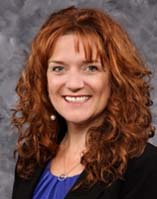 Kelly Sesti serves as the Director of the Administration Bureau within the Michigan Department of Health and Human Services’ Children’s Services Administration (CSA). She has more than two decades of experience in the field of child welfare, across multiple program areas, in both the public and private sectors. Kelly has spent the majority of her career in various leadership roles, including directing the Division of Continuous Quality Improvement (DCQI) and advising the previous four senior deputy directors as CSA’s chief-of-staff. Kelly has extensive experience in quality improvement, data analysis, federal reporting, and is an integral part of the department’s child welfare reform efforts. Kelly holds a Bachelor of Social Work (BSW) from Michigan State University and a Master of Social Work (MSW) from Eastern Michigan University.
President/CEO Michigan Federation for Children and Families President Janet Reynolds Snyder leads the Federation’s policy and advocacy efforts on behalf of member agencies and the populations they serve. She works closely with all branches of state government—executive, judicial and legislative, coordinating those efforts with the Federation’s contracted lobby firm, Public Affairs Associates. She organizes legislative testimony on issues of importance to member agencies and the communities they serve. She serves on a wide variety of statewide task forces and advisory teams. Janet is connected nationally with the major human services advocacy organizations and serves as President of the National Organization of State Associations for Children.
Janet earned her MBA from Spring Arbor University and her Bachelor’s in Education and Psychology from the University of Michigan. Additionally, she earned a Mediation Certification from the Michigan State Court Administrative Office (SCAO) and completed the Domestic Violence Screening Training for Mediators also through SCAO. Janet brings to the Federation 25 years of extensive advocacy skills and knowledge of both the child welfare system and private nonprofit human services sector.
Senior Deputy Director Children’s Service Administration, MDHHS
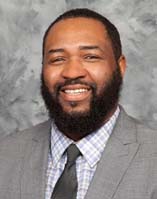 Demetrius has worked in the child welfare field for more than 20 years. He began his career as a Child Protective Services specialist in Wayne County, and has held various management roles including as a first line supervisor in Macomb and Wayne counties, as a services program manager in Monroe and Lenawee, and as a state administrative manager in the Division of Continuous Quality Improvement.
Following his tenure as the social services division administrator in Genesee County, Demetrius served as the county director for Sanilac and St. Clair counties. In February, Demetrius was appointed as the in-home services bureau administrator over prevention, preservation and protection programs. Demetrius also serves on the statewide CSA Anti-Racism Transformation Team, Court Improvement Process Team, and as the CSA representative for the Michigan Action Plan for Father Involvement Advisory Group.
Demetrius has been an integral part of formulating diversity, equity, and inclusion initiatives, human trafficking initiatives, the Handle With Care work, and various continuous quality improvement teams while serving in both rural and urban counties. Demetrius earned a bachelor’s degree in criminal justice from Ferris State University.
Youth Representative
Court Child Welfare Liaison
Child Welfare Supervisor Kent County, MDHHS Selene V. Wadhawan Weiss holds an MSW from Grand Valley State University and has been employed by MDHHS since 1999. She has experience working in both urban in rural counties here in Michigan in the Child Welfare program. Her work experience includes Children’s Protective Services, Children’s Foster Care, Michigan Youth Opportunities Initiative and Indian Outreach Services.
Selene has been serving on the CSA Anti-Racism Taskforce since 2019. As a South Asian woman, she is committed to working to reduce the Black Indian Persons of Color (BIPOC) disproportionality, which currently exists in the Michigan child welfare system.
CEO, Detroit Wayne Integrated Health Network
State Representative, District 16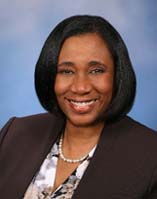 State Rep. Stephanie A. Young is in her first term as state representative of Michigan’s 8th House District, serving northwest Detroit, including the Bethune, Brightmoor, Castle Rouge, College Park, Crary St. Mary’s, and Grandmont-Rosedale communities.
After graduating from Cass Technical High School and Michigan State University’s James Madison College, Rep. Young’s first professional job was as a legislative aide to a former State Representative. Through her work with several former state representatives, numerous mayoral administrations and community advocacy organizations, including the Detroit Area Agency on Aging, Young has put her leadership and relationship building skills to use to improve the lives of her community members at every step.
Prior to her work with the Legislature, Rep. Young served as the first Executive Director of Detroit’s Community Education Commission, where she worked diligently to help improve educational outcomes for Detroit students by eliminating barriers to success and improving access to transportation, quality afterschool programs and information for parents. Young brings her incredible passion for the residents of Detroit, demonstrated outstanding leadership capabilities and a fresh perspective to her role at the Capitol.
Rep. Young is the proud mother of two sons, both graduates of the legendary Cass Technical High School. During the pandemic, her oldest received his Bachelor’s in Animation from the University of St. Francis and her youngest is pursuing a finance degree at Michigan State University’s Eli Broad College of Business. She is also the proud Mom-owner of her 4-legged adopted ‘son’ who has been part of her family for more than 10 years.
Advisory Committee Members
Kristine Andrews, PhD, recognized as one of the Top 40 Young Professionals Under 40 by the Washington Business Journal in 2015, has extensive experience managing large, multi-component implementation evaluations, as well as training and technical assistance projects. As co-chair of Child Trends’ Equity in Research committee, Dr. Andrews guides the application of a racial equity lens to our research. Dr. Andrews is an engaging and dynamic workshop facilitator and conference speaker who has addressed many federal and professional audiences and led practitioner sessions and facilitated expert discussions on topics where she has substantial content expertise, including program sustainability, youth engagement, adolescent parenting and reproductive health, and responsible fatherhood.
Currently, Dr. Andrews is the Principal Investigator of a multi-year training and technical assistance project for the Pregnancy Assistance Fund (PAF) Resource and Training Center within the federal Office of Adolescent Health (OAH). In this role, Dr. Andrews manages complex client relationships across multiple tasks and deliverables to ensure quality and on time submissions; recommends innovative training and TA methodologies to meet individual and multiple grantee needs; and manages subcontractors and product dissemination. Dr. Andrews is a strong qualitative researcher with years of experience as a strong implementation evaluator serving as project manager with renowned foundation clients, such as the Edna McConnell Clark Foundation, Raising a Reader, and the Wallace Foundation.
In addition to building a strong portfolio of federal and foundation evaluation and technical assistance work, Dr. Andrews is focused on broadening Child Trends’ commitment to racial equity in research and corporate culture. She serves as liaison with the Annie E. Casey Foundation, managing our collaboration of the Leaders in Equitable Evaluation and Diversity (LEEAD) project, which connects high-achieving minority scholars with top-level research organizations.
 Ashlee R. Barnes-Lee is a Detroit native and interdisciplinary scholar. She earned a B.A. in both Criminal Justice and Psychology, with honors, and a Ph.D. in Ecological-Community Psychology from Michigan State University (MSU). She has nearly a decade of practical experience working with youth as she has worked in adolescent diversion programs, juvenile probation, and detention centers, and in facilities serving youth diagnosed with mental health challenges. She is currently a Dean’s Research Associate in the School of Social Work at MSU.
Dr. Barnes-Lee’s approach to research encompasses her commitment to increasing access, equity, and creating opportunities for marginalized youth to thrive in their communities. Broadly, her research program aims to eliminate racial/ethnic disparities in the juvenile legal system and to prevent youth’s formal involvement with the juvenile legal system by partnering with schools to develop interventions that promote restorative practices.
Overall, her research has led to 16 peer-reviewed publications in high impact scholarly journals including Children and Youth Services Review and Criminal Justice & Behavior. The completion and dissemination of her research have been supported by nearly $778,745 in grants, competitive fellowships, and travel funding.
Notably, she was awarded a King-Chavez-Park Future Faculty Fellowship through the State of Michigan. In addition, she has received three honorable mentions from the Ford Foundation for her thesis and dissertation research on racial equity in juvenile risk assessment.
In the classroom, Dr. Barnes-Lee aims to create an inclusive learning community where students can feel safe to actively engage in the learning process. Her approach has consistently resulted in strong student evaluations. In addition to her formal teaching experience, she has taught, trained, and mentored 26 graduate and undergraduate student research assistants who disseminated their findings at national conferences and later earned degrees in Psychology, Criminal Justice, Social Work, and Public Policy.
Dr. Barnes-Lee is a member of several professional associations, including the American Psychological Association (Division 27) Society for Community Research and Action and American Society of Criminology. She is currently serving as an expert to the Council of State Governments Justice Center Risk and Needs Assessment Advisory Group as well as the Michigan Child Welfare Task Force Advisory Committee.
Senior Associate, the Center for the Study for Social Policy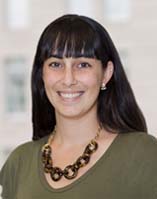 Alexandra Citrin (she/her) is a Senior Associate at the Center for the Study of Social Policy, a national, non-profit policy organization that connects community action, public system reform, and policy change to create a fair and just society in which all children and families thrive. Alexandra is an expert in child welfare policy and practice and its effect on communities of color, LGBTQ+ youth, and immigrant families. Alexandra has been deeply involved in working with states and national partners to understand the complexities and requirements of the Family First Prevention Services Act (FFPSA) and identifying opportunities within the bill to advance anti-racist child welfare policy and practice both as it relates to prevention services and the reduction of congregate care. She currently leads the team providing intensive technical assistance to states developing and implementing prevention activities through FFPSA. Alexandra’s system-reform work also includes providing technical assistance to state and local child welfare systems through child welfare systems operating under federal consent decree and the Infant Toddler Court Team Program. Her policy expertise includes child welfare system and finance reform, health care, and immigration—with a focus on using frontline practice—knowledge to inform equity-focused policymaking. She leads CSSP’s federal child welfare policy work and works with policymakers and national partners to advance anti-racist policy. In addition, Alexandra is a trained reviewer for the Child and Family Service Review, Quality Service Review, and Institutional Analysis and co-leads trainings on the history of racism in child welfare, implicit bias, and strategies to advance anti-racist policy and practice solutions.
Prior to joining CSSP, Alexandra was a family advocate at the Center for Family Representation, Inc. in New York, where she engaged in direct practice with parents and families involved in the child welfare system; She was a Child Welfare Scholar at the University of Michigan where she earned a master’s degree from the Graduate School of Social Work and a master’s degree in public policy from the Ford School.
Director of Research, Chapin Hall Dr. Anne Farrell is the Director of Research at Chapin Hall at the University of Chicago. As the research leader of the organization, she serves a critical role in keeping Chapin Hall at the forefront of policy research, fostering innovative, rigorous, and actionable studies. Farrell supports the acquisition and development of talent and engages in collaborations that ensure the creation, delivery, and development of knowledge and strategies to improve the well-being of children, youth, and families. In addition to leading Chapin Hall’s translational research agenda, Farrell engages in organizational strategy development, business development, research design, and implementation support and advises initiatives within and beyond Chapin Hall.
Farrell’s career began as a frontline worker conducting home visits in early intervention and child welfare programs situated in a healthcare organization. She held positions of increasing responsibility while pursuing a funded program of translational scholarship related to historically disenfranchised populations. Formerly a tenured professor and director of a research center at the University of Connecticut, she conducts research and policy analysis on housing, child welfare, cross-systems collaborations, family-centered supports, and family and community resilience. Farrell’s career is marked by a distinctive focus on mentoring and Farrell was recognized by the Connecticut Chapter of the National Council on Family Relations (NCFR) for distinguished performance as a mentor. Farrell has been Principal Investigator on projects ranging from community evaluations to randomized studies and large scale federally funded projects. She recently led a project that produced a screening tool on housing instability for use in child welfare that has been adapted for use in early childhood systems. She speaks frequently on the topic of housing, authored several peer-reviewed publications in this area, and serves on the editorial boards of multiple scholarly journals. She is the Chair of the Family Policy Section of the NCFR and the incoming coeditor of the Journal of Child and Family Studies.
Farrell received a PhD in Clinical and School Psychology from Hofstra University, a Master of Arts in Psychology with Distinction from Hofstra University, and a Bachelor of Arts in Psychology from Fairfield University.
Senior Policy Analyst, Center for the Study of Social Policy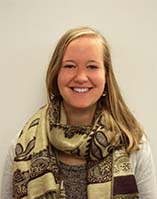 Ali Jawetz is a Senior Policy Analyst at the Center for the Study of Social Policy, working on the team that monitors child welfare systems facing class-action litigation and operating under federal consent decrees. She also supports initiatives that focus on the use of data to inform policy decisions, as well as projects that use research on adolescent brain development to improve the ways in which child welfare and juvenile justice systems interact with young people. Her research and professional goals are focused on how to prevent entry into the child welfare system and promote safe family reunification for families that have been separated.
Senior Associate, Center for the Study of Social Policy Lisa Mishraky-Javier, LMSW, is a Senior Associate working to advance the Center of the Study of Social Policy’s public system reform efforts, focusing on the use of data and research to inform policy, decision making and best practices. Ms. Mishraky-Javier has expertise in child welfare system reform, adolescent development, protective factors, and authentic youth engagement. She is part of a team responsible for monitoring and providing technical assistance to child welfare systems operating under federal consent decrees to improve practice for children and families.
Prior Task Force Members
 Sen. Marshall Bullock began his path to public service at an early age.
The lifelong Detroiter learned the basics of serving people, family and communities as an Eagle Scout.
Bullock has dedicated nearly three decades of his career to improving the lives of youth through social work and as a juvenile justice advocate.
He also was a key member of Detroit Mayor Mike Duggan’s administration, where he served as a district manager tasked with bringing residents together, combating blight and, ultimately, building stronger neighborhoods.
Bullock continues to stand up for Detroit families and seniors in the state Senate, where he is focused on providing kids with a world-class education, making commonsense reforms to auto insurance, and fighting for accessible, affordable health care and mental health programs.
Bullock is a graduate of Detroit Public Schools. He earned a degree in human services from the University of Phoenix.
He and his wife, Angela, live in Detroit with their three children, Maya and twins Marshall III and Layla.
 Justice Megan Cavanagh is a life-long Michigander who grew up in East Lansing and lives in metro Detroit. She is a graduate of the University of Michigan College of Engineering and Wayne State University Law School. Before joining the Michigan Supreme Court in January of 2019, she had over fifteen years of experience as one of Michigan’s top appellate attorneys and was a shareholder at Garan Lucow Miller P.C. in Detroit.
Justice Cavanagh is the Supreme Court Liaison to Tribal Courts, Child Welfare Services, the Well-Being in the Law Task Force, the Attorney Grievance Commission, and the Judicial Tenure Commission. She also serves as the Co-Lead to the Child Protective Legal Representation Task Force and on the Attorney General’s Elder Abuse Task Force.
Justice Cavanagh has served as Chair of the Appellate Practice Section of the State Bar of Michigan, as a council person for the Negligence Section of the State Bar of Michigan, as co-chair of the Michigan Bench Bar Appellate Conference Foundation, and as a member of the Michigan Attorney Grievance Commission.
Prior to her election to the Court, Justice Cavanagh was rated as one of Michigan’s Super Lawyers. She was honored by Michigan Lawyer’s Weekly as Lawyer of the Year in 2006 and a Woman in the Law in 2017.
Justice Cavanagh and her husband have four children.
Dr. Zeinab Chahine dedicated the past 36 years to improving the lives of families and children. Since 2007, she has been serving as a Managing Director for Strategic Consulting at Casey Family Programs, a national foundation dedicated to improving child welfare outcomes. She heads Casey’s New York City Office and is responsible for the foundation’s strategic consulting engagements in 16 states and multiple jurisdictions. Dr. Chahine is considered one of the leading national experts on child protection. Since 2011, she has been leading Casey’s national efforts to improve safety and prevent child maltreatment-related fatalities. Prior to joining Casey Family Programs, Dr. Chahine served as NYC’S Administration for Children’s Services Executive Deputy Commissioner for Child Welfare Programs. In that role, she was responsible for the operation of all child protective, preventive, foster care and adoption services in New York City. During her 22-year career in NYC child welfare system, she also held casework, supervisory and managerial positions in child protective services. She had a significant role in the design, development, and implementation of major innovative child welfare reform initiatives in NYC.
She received local and National recognition for her work. In May 2, 2007, she was featured in the New York Daily News as an Immigrant New Yorker who has made a positive difference for the City. She was awarded The National Association of Public Child Welfare Administrators Peter W. Forsythe Award for Leadership in Public Child Welfare in 2009. Dr. Chahine holds a Bachelor of Arts degree from Hunter College, a Master of Social Work degree from Columbia University, and a Doctoral degree from the Graduate School and University Center – City University of New York.
 Justice Elizabeth T. Clement joined the Michigan Supreme Court on November 17, 2017, becoming the 113th Justice and the 11th woman to serve on the bench. She serves as the liaison to the 188 Problem-Solving Courts in the state of Michigan, which include drug and sobriety, mental health, veterans, and other nontraditional courts. These special court programs focus on providing treatment and intense supervision to offenders, resulting in improved quality of life, reduced crime, safer communities, and avoiding costly incarceration.
In addition to her role with Problem-Solving Courts, Clement also serves as the Court’s liaison to the State Court Administrative Office Department of Child Welfare Services and Michigan Judicial Institute. Child Welfare Services provides assistance to juvenile courts on child welfare matters, including child protective proceedings, foster care, adoption, termination of parental rights, permanency outcomes, and data collection and analysis. The Michigan Judicial Institute is the Court’s training arm for the judiciary.
Prior to her election to the court, Clement served as Chief Legal Counsel in the Executive Branch, advising on a wide variety of legal, legislative, and policy matters. Her duties as Chief Legal Counsel also included working with the Attorney General’s Office on litigation affecting the state of Michigan, negotiating tribal compacts and settlement agreements, and interviewing and recommending appointees to Court of Appeals and Supreme Court judicial vacancies.
She previously held the positions of cabinet secretary and deputy chief of staff, as well as deputy legal counsel in the Governor’s Office.
Clement served as legal counsel in the Michigan Senate in 2010 where she provided legal research, analysis, and advice on legislation and management of the office. In addition, she was responsible for the State Senate advice and consent process including providing reports and recommendations on appointees. Prior to this role, she served in the Senate Majority Policy Office from 2006 to 2010, where Clement provided analysis and research to the Senate Judiciary Committee, Senate Health Policy Committee, and the Senate Local and State Affairs Committee.
Clement owned and operated Clement Law, PLLC, from 2002 to 2006, where she represented individuals and businesses primarily in the areas of family law, adoption, probate, estate planning, and criminal law.
Prior to working in private practice, Justice Clement worked as a legislative aide to the Senate Majority Leader in the Michigan Senate.
Clement was licensed to the State Bar of Michigan in 2002. She graduated from the Michigan State University College of Law that same year, where she served as an executive member of the Moot Court Board. She attended Michigan State University on an academic scholarship and graduated in 1999 with a B.A. in political science.
 As vice president of the Annie E. Casey Foundation’s Center for Systems Innovation, Sandra Gasca-Gonzalez oversees national and state reform efforts in three key areas: child welfare, young people transitioning into adulthood and juvenile justice.
Prior to assuming this role in 2018, Gasca-Gonzalez served as the director of the Jim Casey Youth Opportunities Initiative, which aims to equip young people leaving foster care with the relationships, resources and opportunities needed to achieve well-being and success as they transition into adulthood.
A former Children and Family Fellow, Gasca-Gonzalez joined the Foundation in 2015. She previously worked at KVC Health Systems, a national leader in behavioral health care, child welfare, and community health and wellness. As the nonprofit’s executive vice president of practice and leadership integration, Gasca-Gonzalez led efforts to transform child welfare systems with results-based decision making and clinical best practices.
Gasca-Gonzalez’s career stops include the Child and Family Services Agency in Washington, D.C., KVC Nebraska and Youthville (now EmberHope), a Kansas-based nonprofit serving at-risk youth and families.
Gasca-Gonzalez is a graduate of the National Hispanic Leadership Institute and holds an Executive Leadership Certificate from Harvard University. She earned a master’s degree in psychology from Emporia State University and a bachelor’s degree from Southwestern College in Kansas.
CEO, Saginaw County CMH Authority

Sandra M. Lindsey is Chief Executive Officer of the Saginaw County Community Mental Health Authority and has served in this position for more than 22 years. For more than 30 years, she has worked with, or on behalf of, persons with behavioral health disorders, and those with intellectual and developmental disabilities and their families in Michigan’s public community mental health system.
Prior to her current role in Saginaw, Lindsey served as Executive Director of the Oakland County Community Mental Health Authority. She was also co-founder, and served as executive director, of Training and Treatment Innovation, Inc., a nonprofit agency that provides clinical and support services to disabled persons in Southeast Michigan counties.
Lindsey is currently serving her second term on Michigan Governor Gretchen Whitmer’s Committee for Juvenile Justice. She served three terms as a member of the Governor’s Task Force on Abuse and Neglect, appointed by Michigan Governors Jennifer Granholm and Rick Snyder. She has served as chair of the Saginaw County Community Corrections Advisory Board for more than a decade. She is an active member of the Community Mental Health Association of Michigan and chairs the statewide CMH/PIHP Directors’ Forum. In addition, Lindsey was a co-founder of Alignment Saginaw, the state-recognized community collaboration for Saginaw County, and she is a long-time board member and Secretary for the Michigan Health Improvement Alliance (MiHIA) and a BWell Saginaw Coalition Partner.
Lindsey has been married to Rod Mugridge, a retired psychologist, for 38 years, and she splits her time between residences in Lathrup Village (in Oakland County) and Saginaw Twp. She has an undergraduate degree in social work from Wayne State University and a master’s in social work degree from the University of Michigan. Lindsey loves to travel with her husband and friends, is an avid reader, and loves baking, interior design, golf, theater and concerts.
Shayne Machen serves as the Special Advisor to the Children’s Services Agency Director. Prior joining the Children’s Services Agency, Shayne worked for the Little River Band of Ottawa Indians. There she served as in-house counsel and as the Indian Child Welfare Act (ICWA) attorney. As the ICWA attorney, Shayne was responsible for representing the tribe in state court child welfare proceedings. Prior to working for the Little River Band, Shayne served as a Deputy District Attorney in the Sacramento County District Attorney’s Office in Sacramento, California. Shayne is licensed to practice law in Michigan and California. She has a B.A. in Economics and holds a Juris Doctor degree from Syracuse University College of Law.
 Republican, of Coopersville; born March 8, 1975 in Coopersville; Baptist; spouse, Victoria; children, Julie, Esther, Anthony, Samantha, and Kennett, Michigan State University Great Lakes Leadership Academy, 2011 to 2012; dairy farmer; owner, A&L Machinery and Repair; member, executive committee, Ottawa County Republican Party, 2013 to 2018; member, board of directors, Healthy Water Rural Pride, 2012 to present; member,
Ottawa County Republican Party executive board of directors, 2012 to present; former trustee, Polkton Township, 2012 to 2018; member, Ottawa County Farmland Preservation board, 2011 to present; member, Critter Barn Zeeland Board, 2009 to present; member, Ottawa County Farm Bureau, 2007 to present; member, Ottawa County Farmland Preservation, 2001 to present; former co-chair, Committee on Communication, Ottawa County Farm Bureau; member, American Cheese Society; member, Michigan Farm Bureau; former chair, Outreach Committee, Ottawa County Republican Party; vice president, Ottawa County Farm Bureau board of directors, 2007 to 2013; co-chair, Breakfast on the Farm, 2011; elected to the House of Representatives, 2018.
 Chief Judge 14th Circuit & 61st Probate Courts Muskegon County
Judge Gregory C. Pittman is a lifelong resident of Muskegon County. Gregory graduated from Michigan State University in 1983, and received his Juris Doctor degree from the Indiana University Maurer School of Law in 1987. He has worked with the Michigan Department of Commerce, Kent County Public Defender’s Office, and in private practice with the law firm of Williams, Hughes, Corwin & Sinninger.
Judge Pittman served as Magistrate of the 60th District Court, and is an adjunct faculty member at Muskegon Community College, Baker College, and the Michigan Judicial Institute.
On January 6, 1998, Governor John Engler appointed Judge Pittman to the Muskegon County Probate Bench. His appointment filled the final slot in the 14th Circuit Court Family Division. Judge Pittman has been re-elected, continuously, since 1998.
On November 12, 2021, The Michigan Supreme Court appointed Judge Pittman to serve as the Chief Judge of both the 14th Circuit Court and the 61st Probate Court for Muskegon County. Judge Pittman is the first African-American, in Muskegon County history, selected to lead the Muskegon County court system.
Throughout Judge Pittman’s career, the role of difference maker has been fully embraced as he works to improve the quality of life for all people.
 Joe Ryan’s research and teaching build upon his direct practice experiences with child welfare and juvenile justice populations. Dr. Ryan is the Co-Director of the Child and Adolescent Data Lab an applied research center focused on using data to drive policy and practice decisions in the field. He is currently involved with several studies including a randomized clinical trial of recovery coaches for substance abusing parents in Illinois (AODA Demonstration) , a foster care placement prevention study for young children in Michigan (MI Family Demonstration), a Pay for Success (social impact bonds) study focused on high risk adolescents involved with the Illinois child welfare and juvenile justice system and a study of the educational experiences of youth in foster care (Kellogg Foundation Education and Equity).
He is currently serving on the editorial board of four journals (Child Maltreatment, Social Work Research, Residential Treatment for Children and Youth and Child Welfare).
Ryan is committed to building strong University and public agency partnerships that utilize empirical evidence to advance knowledge and address critical questions in the fields of child welfare and juvenile justice.
 David Sanders joined Casey Family Programs in July 2006. He oversees the foundation’s work with child welfare systems to improve practice, with an emphasis on ensuring safe and permanent families for children. He also oversees the foundation’s public policy work. Prior to joining Casey Family Programs, he directed all operations for the Los Angeles County Department of Children and Family Services.
Casey Family Programs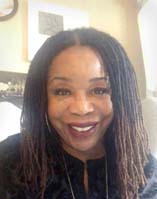 Anita Shannon, Strategic Consulting Senior Director with Casey Family Programs leads system reform efforts to support CFP’s 2020 Vision of ensuring that every child has a safe, supportive and permanent family, and that every family has the support of a strong and caring community. Anita’s work includes creating and sustaining collaborative partnerships among child welfare leadership, the judicial, executive, and legislative branches of government, community provider organizations, and child welfare advocates. Anita’s primary focus is on creating hope and opportunities in the state of Michigan and the Commonwealth of Kentucky, while supporting the safe reduction of their respective foster care populations. She has also led Casey’s system reform work in the nation’s capital, Washington, D.C., and the Commonwealth of Puerto Rico by guiding partnerships to infuse best practices and strategies seamlessly into these jurisdictions.
Throughout her career, Anita has used a hands-on approach to identifying and utilizing meaningful, community inclusive partnerships to positively impact children, families, and the communities in which we live.
 Dr. Spigner joined the University of Pennsylvania School of Social Policy and Practice in July 1999 as a visiting professor and joined the faculty permanently in September 2000. Prior to her arrival at Penn, Dr. Spigner had been the Associate Commissioner of the Children’s Bureau at the U.S. Department of Health and Human Services’ Administration for Children and Families (ACF) and was responsible for the administration of federal child welfare programs. Most recently Spigner has served on the Pew Commission for Children in Foster Care; the Mayor’s Child Welfare Review Panel for the City of Philadelphia; and the Workgroup for the Michigan Racial Equity Task Force. She also serves on the Board of the Center for the Study of Social Policy.
Dr. Spigner has published a variety of articles in the areas of cultural competency, permanency planning and relative care. Her work focuses on the reform of public child welfare agencies and child welfare policy.
 Vivek Sankaran, ’01, advocates for the rights of children and parents involved in child welfare proceedings. His work focuses on improving outcomes for children in foster care by empowering their parents and strengthening decision-making processes in juvenile courts. A clinical professor of law at the University of Michigan Law School, Professor Sankaran directs both the Child Advocacy Law Clinic and the Child Welfare Appellate Clinic, through which law students represent children and parents in trial and appellate proceedings. Professor Sankaran has written numerous articles focused on improving the child welfare system and has litigated cases before the Michigan Supreme Court. In addition, he conducts state and national trainings and works on child welfare initiatives with various national groups, including the American Bar Association, Casey Family Programs, and the National Center for State Courts.
After graduating from Michigan Law in 2001, Professor Sankaran received a Skadden Fellowship to represent children at The Children’s Law Center in Washington, D.C., where he remained until 2005, when he joined the Law School faculty. In 2009, Professor Sankaran founded the Detroit Center for Family Advocacy, the first organization in the country to provide multidisciplinary legal assistance to families to prevent the unnecessary entry of children into foster care. In 2011, he was named Michigan’s Parent Attorney of the Year. Most recently, Professor Sankaran co-edited both the first national book for family defense lawyers and the third edition of Child Welfare Law and Practice, a widely recognized resource used by child welfare lawyers across the country.
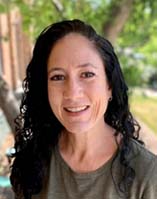 Ann Silverberg Williamson was appointed executive director in October 2013. Williamson has dedicated her career to serving children, families, and adults through public-private partnerships. As executive director, she is responsible for the administration and supervision of a committed workforce that provides support and services to Utah’s most vulnerable children, families and adults.
Utah Department of Human Services is composed of the Division of Aging and Adult Services, Division of Child and Family Services, Division of Juvenile Justice Services, Division of Services for People with Disabilities, Utah State Developmental Center, Utah State Hospital, Division of Substance Abuse and Mental Health, Office of Licensing, Office of Recovery Services and Office of Public Guardian.
Services provided by Utah Department of Human Services are designed to meet Utahns in their communities and in a manner that best meets their needs. Working closely with community partners, the primary goal of the department is to give children, youth, individuals, and families an opportunity to live safe, healthy and successful lives.
A native of Louisiana, Williamson served that state for the past 15 years working in both the public and private sectors in the interests of human services. Throughout her career, she has been seen as a reformer seeking the most effective and efficient use of resources to produce results for those she serves.
Williamson led the Louisiana Department of Social Services (DSS, now Department of Children and Family Services) from 2001-2008, holding consecutive cabinet posts. While at the agency, Williamson championed the development of the integrated human service delivery program, “No Wrong Door,” and led the department’s emergency response to the 2005 catastrophic hurricanes that impacted the state. During her tenure, the U.S. Department of Agriculture honored DSS with the Pinnacle Award, a national citation of excellence, for the department’s efforts following the storms.
From 2009 until 2013, as President and CEO of the Louisiana Association of Nonprofit Organizations (LANO), Williamson led advocacy efforts for the statewide member organization working to strengthen the effectiveness and sustainability of the nonprofit sector. In 2012, she was honored as one of the nation’s top 50 leaders by The NonProfit Times.
Williamson graduated from Wofford College, in Spartanburg, South Carolina, with a degree in theology and earned a master’s in Social Work from Louisiana State University (LSU). Williamson received awards from both Wofford College and LSU as a Distinguished Alumna.
 Jason Smith leads MCYJ’s legislative advocacy efforts and is responsible for managing several of MCYJ’s projects that aim to reduce the use of out of home placement through the statewide expansion of effective, community-based programming for justice-involved youth. In the past, Jason served as the lead researcher and co-author of “Restoring Kids; Transforming Communities,” a report that details the use of juvenile court diversion programs in Michigan.
Jason began his career in the field of juvenile justice as an intern with the Ingham County Circuit Court’s Family Division. After graduating from Michigan State University, Jason worked as a direct care provider at a transitional home for adjudicated girls, then as a case manager within Wayne County’s juvenile justice system. While working on his Master of Social Work degree at the University of Michigan, Jason interned with the Washtenaw County Michigan Prisoner Reentry Initiative and MCYJ. Before joining MCYJ in 2014, Jason co-managed a youth diversion program in Skokie, IL and was also a 2011 Youth Justice Leadership Institute Fellow with the National Juvenile Justice Network.
 For more than 15 years, Michael E. Williams has served as President and Chief Executive Officer of Orchards Children’s Services, Inc., Michigan’s premier Child & Family Services agency. Mr. Williams has forged new paths for the organization by working closely with board members to foster a culture of philanthropy. He has also restructured Orchards’ programming to include preventative family preservation models, education, and workforce development initiatives. Mr. Williams has expanded Orchards regionally, enhancing its community presence and brand recognition. Under Williams’ leadership, Orchards has been recognized nationally for its service delivery by the national Council on Accreditation. Orchards also received the Detroit Free Press Top Workplace designation.
In addition to his position with Orchards, Mr. Williams serves as a Trustee for Albion College. He was appointed by Governor Rick Snyder to the Michigan Health Endowment Fund Board. Mr. Williams held the Office of President of the Association of Accredited Child and Family Agencies and is an active participant in the National Black Child Development Institute.
Before coming to Orchards Children’s Services, Mr. Williams was President of Starr Vista, Inc., a Care Management Organization. He has been a recipient of the Michigan’s Children “Hero’s” Award, the Detroit Community Health Connection, Inc. Leadership Award, and the Josephine S. Weiner Award for Community Service Award by the National Council of Jewish Women Detroit Chapter.
Michael Williams has dedicated his career to supporting children and families. At home, he is a loving husband, father and grandfather.
Lynette serves as the deputy director for the Michigan Department of Health and Human Services of Wayne County, Children Services Administration in Detroit, Michigan. She earned a Master of Social Work degree from the University of Michigan in Ann Arbor, and a Bachelor of Science degree in psychology from Eastern Michigan University in Ypsilanti. She is a licensed Social Worker. She is a Missionary volunteer at Greater New Mount Moriah Missionary Baptist Church. She is serving on the Governor’s Task Force on Child Abuse and Neglect, representing child protective service agencies, until December 31, 2022.